

Finding the perfect foundation shouldn’t feel like guesswork. If you’re here, you’re likely trying to figure out why a formula that works for someone else doesn’t sit right on your skin. The truth is, choosing foundation for skin type is the difference between a flawless, natural finish and makeup that cakes, creases, or disappears by midday.
In this guide, we break down exactly how different formulas interact with oily, dry, combination, and sensitive skin. You’ll learn what ingredients to look for, which finishes enhance your complexion, and how to avoid common mismatches that sabotage your look.
Our approach is rooted in skincare science and real-world application—drawing from ingredient research, professional techniques, and practical testing across skin types. By the end, you’ll know precisely how to select a foundation that works with your skin, not against it.
Walking into a beauty store, lights blazing and shelves shimmering, can feel like stepping into a maze of glass bottles and bold promises. The air smells faintly of powder and perfume, and suddenly every foundation claims to be “the one.” However, the real secret to choosing foundation for skin type starts before you swatch a single shade. This guide gives you a clear, step-by-step system to decode your undertone, texture, and finish preferences. By the end, you’ll glide on a formula that melts seamlessly, feeling weightless and breathable (no mask-like heaviness). In other words, flawless match begins with understanding skin.
Decoding Your Skin Type: The First and Most Critical Step
Before you fall in love with a trending bottle on TikTok or a celebrity-endorsed compact, pause. Skin type is the non-negotiable starting point. In simple terms, your skin type is how your skin naturally behaves—how much oil it produces, how well it retains moisture, and how reactive it tends to be. Get this right, and everything else becomes easier (like assembling IKEA furniture with the instructions for once).
Why does this matter? Because choosing foundation for skin type means longer wear, smoother texture, fewer breakouts, and less midday regret staring back at you in the mirror.
For Oily Skin:
- Choose oil-free, matte, or powder foundations.
- Look for ingredients like salicylic acid (a beta hydroxy acid that helps unclog pores) and silica (absorbs excess oil).
These help control shine throughout the day and reduce pore congestion. Avoid overly hydrating or “dewy” formulas—they can slide off by noon (and not in a chic way).
For Dry Skin:
- Opt for hydrating liquid, cream, or serum foundations.
- Seek hyaluronic acid (draws water into the skin) and glycerin (locks in moisture).
Matte formulas can cling to dry patches and emphasize fine lines. Instead, choose glow-enhancing finishes for a smoother, plumper look.
For Combination Skin:
Balance is key. A satin finish foundation offers middle-ground coverage. Alternatively, use strategic powdering on the T-zone while keeping cheeks hydrated. (Yes, you can multitask—your foundation can too.)
For Sensitive & Acne-Prone Skin:
Prioritize non-comedogenic (won’t clog pores), fragrance-free, and mineral-based formulas. Ingredients like niacinamide can calm redness, while alcohol and certain heavy oils may trigger irritation.
The benefit? Fewer flare-ups, better wear time, and makeup that enhances your skin instead of fighting it. Pro tip: Patch test new formulas for 24 hours before full application. Your future self will thank you.
Mastering Coverage and Finish: Crafting Your Ideal Look
Coverage and finish are NOT the same thing (even though they’re often treated like a package deal). Coverage refers to how much pigment masks your skin. Finish describes how that pigment reflects light. Understanding both lets you customize your base instead of settling for whatever’s trending on TikTok.
Coverage Levels Explained
Sheer/Light: Contains lower pigment concentration, often found in tinted moisturizers and skin tints. These formulas even tone while letting freckles and texture show through. Ideal for “no-makeup” makeup days (think off-duty model vibes).
Medium: Built with adjustable pigment levels, medium coverage foundations layer without caking. They blur redness and minor blemishes while maintaining dimension. Many modern formulas include flexible polymers for smoother blending and longer wear.
Full: High pigment density delivers near-total opacity. Best for hyperpigmentation, acne, or scarring. Long-wear full coverage options often include oil-absorbing powders or film-forming agents for durability.
Choosing Your Finish
Matte: Shine-free and often formulated with silica or clay to control oil. Great for humid climates or long events.
Satin/Natural: Balanced reflectivity mimics real skin. Works across most skin types and lighting conditions.
Dewy/Radiant: Infused with humectants like glycerin for hydration and glow. Especially flattering on dry or mature skin.
| Choice | What It Controls | Best For | Key Benefit |
|---|---|---|---|
| Coverage | Pigment level |
Discoloration needs | Custom concealment |
| Finish | Light reflection | Skin type & setting | Desired glow level |
When choosing foundation for skin type, treat coverage and finish as separate dials. Pro tip: set only the areas that crease to preserve dimension. The result? SKIN that looks intentional, not overdone.
The Secret to a Perfect Shade: Finding Your Undertone
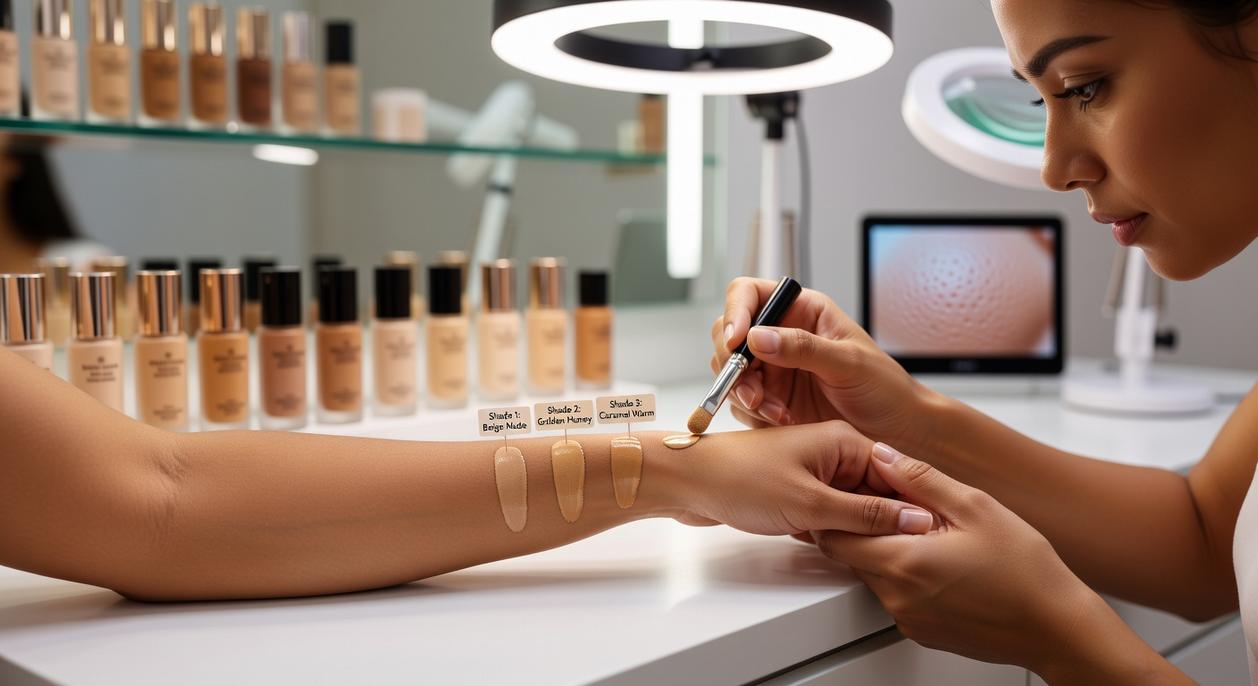
If your foundation looks ashy, orange, or just… off (you know the vibe), the issue usually isn’t coverage. It’s undertone. An undertone is the subtle color beneath your skin’s surface. Unlike your skin tone (fair, medium, deep), your undertone doesn’t change with sun exposure. It quietly influences how every shade looks on you.
Start with two simple tests:
The Vein Test: Check the veins on your wrist in natural light. Blue or purple veins suggest a cool undertone (pink or red hues). Greenish veins point to a warm undertone (yellow, golden, or peach hues). A mix? You’re likely neutral.
The Jewelry Test: If silver jewelry makes your skin pop, you’re probably cool. If gold flatters you more, you’re warm. If both look great, welcome to neutral territory.
When shopping, look for foundation labels: C (Cool), W (Warm), N (Neutral). This is crucial when choosing foundation for skin type and undertone together (yes, both matter).
Some argue undertone tests are unreliable. Fair—but combining both tests dramatically improves accuracy. Pro tip: always swatch along your jawline, not your hand.
And don’t forget, flawless makeup starts with skin prep. Your everyday skincare routine for busy professionals makes foundation sit better and last longer.
Get the undertone right, and everything else clicks into place.
The Final Test: How to Sample and Apply for a Perfect Match
Testing foundation on the back of your hand is like paint-matching your living room using a garage wall—WRONG SURFACE. Your face and hand rarely share the same tone.
The Right Way to Swatch:
- Apply 2–3 shades in vertical stripes from cheek to jawline, slightly onto the neck.
- Think of it as laying fabric samples against a dress pattern—the blend tells the truth.
Let It Settle: Wait a few minutes. Foundation oxidizes (darkens as it reacts with air and oils).
Check in Natural Light: The shade that disappears is your match. MASTER THIS before choosing foundation for skin type.
Start simple: identify your skin type, decide on coverage and finish, and understand your undertone. Mastering choosing foundation for skin type eliminates costly guesswork. When you know your formula, shopping feels strategic, not stressful. Next, explore tools, seasonal shade shifts, and setting techniques to elevate results. Build confidence with practice.
Before diving into the specifics of selecting the perfect foundation for your unique skin type, it’s essential to first grasp the fundamental role of your skin barrier, as detailed in our article on ‘Understanding the Skin Barrier and Why It Matters.’
Mastering Your Makeup Starts with the Right Foundation
You came here to finally understand how to choose a foundation that actually works for your skin — not against it. Now you know that undertones matter, formulas aren’t one-size-fits-all, and that choosing foundation for skin type is the difference between a flawless glow and a frustrating finish.
If you’ve ever dealt with cakey texture, excess shine, patchiness, or makeup that disappears by midday, the issue likely wasn’t your skills — it was your match. Oily skin needs balance. Dry skin needs nourishment. Combination skin needs strategy. When you align your formula with your skin’s real needs, everything changes.
Now it’s time to act on what you’ve learned. Audit your current foundation. Check the formula. Match it to your skin type. If it’s not serving you, replace it with one designed specifically for your concerns.
Don’t settle for makeup that fights your skin. Upgrade your routine with expert-backed beauty insights trusted by thousands of readers who rely on us for clear, science-informed guidance. Explore more skincare science and modern beauty basics now — and start wearing foundation that actually works for you.
 There is a specific skill involved in explaining something clearly — one that is completely separate from actually knowing the subject. Ricardofads Flagg has both. They has spent years working with everyday glam hacks in a hands-on capacity, and an equal amount of time figuring out how to translate that experience into writing that people with different backgrounds can actually absorb and use.
Ricardofads tends to approach complex subjects — Everyday Glam Hacks, Gossis Aesthetic Techniques, Modern Beauty Basics being good examples — by starting with what the reader already knows, then building outward from there rather than dropping them in the deep end. It sounds like a small thing. In practice it makes a significant difference in whether someone finishes the article or abandons it halfway through. They is also good at knowing when to stop — a surprisingly underrated skill. Some writers bury useful information under so many caveats and qualifications that the point disappears. Ricardofads knows where the point is and gets there without too many detours.
The practical effect of all this is that people who read Ricardofads's work tend to come away actually capable of doing something with it. Not just vaguely informed — actually capable. For a writer working in everyday glam hacks, that is probably the best possible outcome, and it's the standard Ricardofads holds they's own work to.
There is a specific skill involved in explaining something clearly — one that is completely separate from actually knowing the subject. Ricardofads Flagg has both. They has spent years working with everyday glam hacks in a hands-on capacity, and an equal amount of time figuring out how to translate that experience into writing that people with different backgrounds can actually absorb and use.
Ricardofads tends to approach complex subjects — Everyday Glam Hacks, Gossis Aesthetic Techniques, Modern Beauty Basics being good examples — by starting with what the reader already knows, then building outward from there rather than dropping them in the deep end. It sounds like a small thing. In practice it makes a significant difference in whether someone finishes the article or abandons it halfway through. They is also good at knowing when to stop — a surprisingly underrated skill. Some writers bury useful information under so many caveats and qualifications that the point disappears. Ricardofads knows where the point is and gets there without too many detours.
The practical effect of all this is that people who read Ricardofads's work tend to come away actually capable of doing something with it. Not just vaguely informed — actually capable. For a writer working in everyday glam hacks, that is probably the best possible outcome, and it's the standard Ricardofads holds they's own work to.